The renewables and energy industry is constantly shifting. For marketers working in the utilities space, the focus is no longer on just awareness or promoting tariffs. Instead, there’s a wider communications challenge around helping their audiences make sense of a new renewable-led system, building trust and increasing public confidence.
Market shift: the changing energy landscape
Britain’s energy mix has been changing over the past decade: in 2025, renewables generated a record 44% of Britain’s electricity. However, public understanding isn’t moving at the same pace. Support for renewables is still high, at around 78%, but “strong support” has dropped from 54% in 2021 to 44% in 2025.
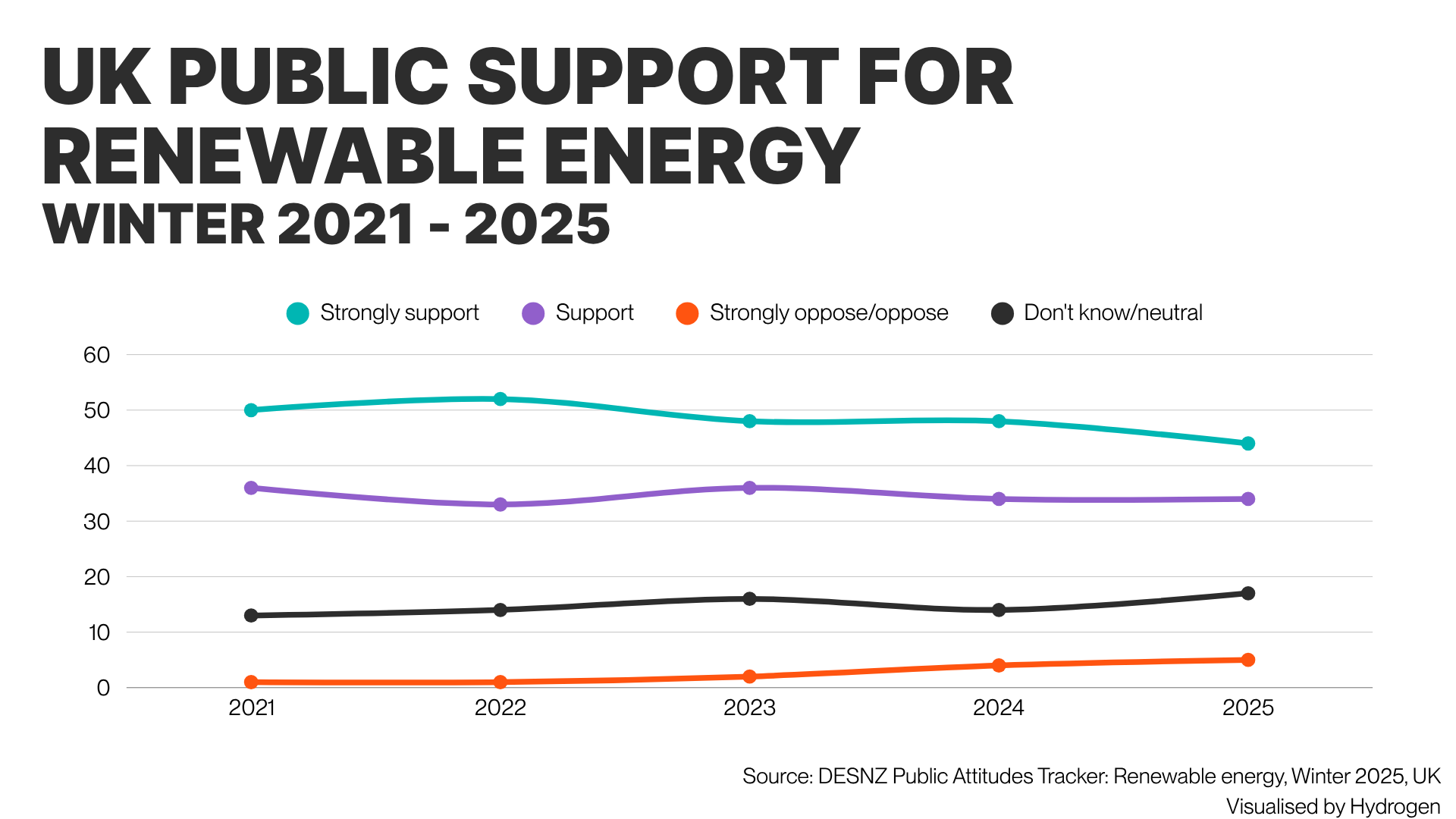
This means that those in the energy industry have additional challenges: building trust, simplifying complex topics and influencing behaviour.
There are three key insights to consider:
Insight 1: The scale of change
The UK needs new infrastructure. Pylons, wind farms, substations and grid upgrades are essential to hitting net zero targets.
However, local opposition to new developments is growing: 42% of UK firms report project delays due to community opposition such as nimbyism (not in my back yard). From those who see windfarms as an eyesore to those who want to receive higher payments from Community Benefit Funds or Local Electricity Discount Schemes, new developments can lead to frustrations in the public.
People want to understand what a project means for them, not just what it delivers nationally, and they want to feel heard. It’s therefore important to be transparent, proactively reducing concerns and shaping the story.
Insight 2: Misinformation within the energy market
Energy has also become a more visible and sometimes politicised topic. There is a growing volume of mixed and conflicting information around pricing, renewables and sustainability claims. For many, it can be difficult to know what to trust. In fact, over half of UK adults (52%) say there’s so much conflicting information about climate change that it is hard to know what to believe.
At the same time, there is increased scrutiny on environmental claims, with the launch of the Green Claims Code in 2021. The guidance makes it clear that sustainability messaging must be specific, evidence-based and not overstate impact.
This creates a balancing act for energy brands: there is a need to communicate progress and ambition, but all messaging must be precise, credible and easy to understand. Even well-intentioned communication can end up driving confusion, so brands need to stay on top of regulations and ASA updates.
Another challenge is how difficult energy bills are to understand, with 18% of customers struggling to understand their bills. Terms like ‘standing charge’ or ‘winter fuel payment’ aren’t always clear, which creates a gap between what’s being charged and what people feel they’re paying for. When that gap isn’t addressed, it can quickly turn into frustration and, over time, contribute to wider confusion and misinformation.
Insight 3: Rising energy costs
Energy prices remain one of the most immediate and sensitive issues for consumers.
When costs rise, the assumption is often that companies are benefiting. In reality, pricing is influenced by a combination of wholesale markets, infrastructure investment and wider economic factors – but that complexity is not always visible to customers.
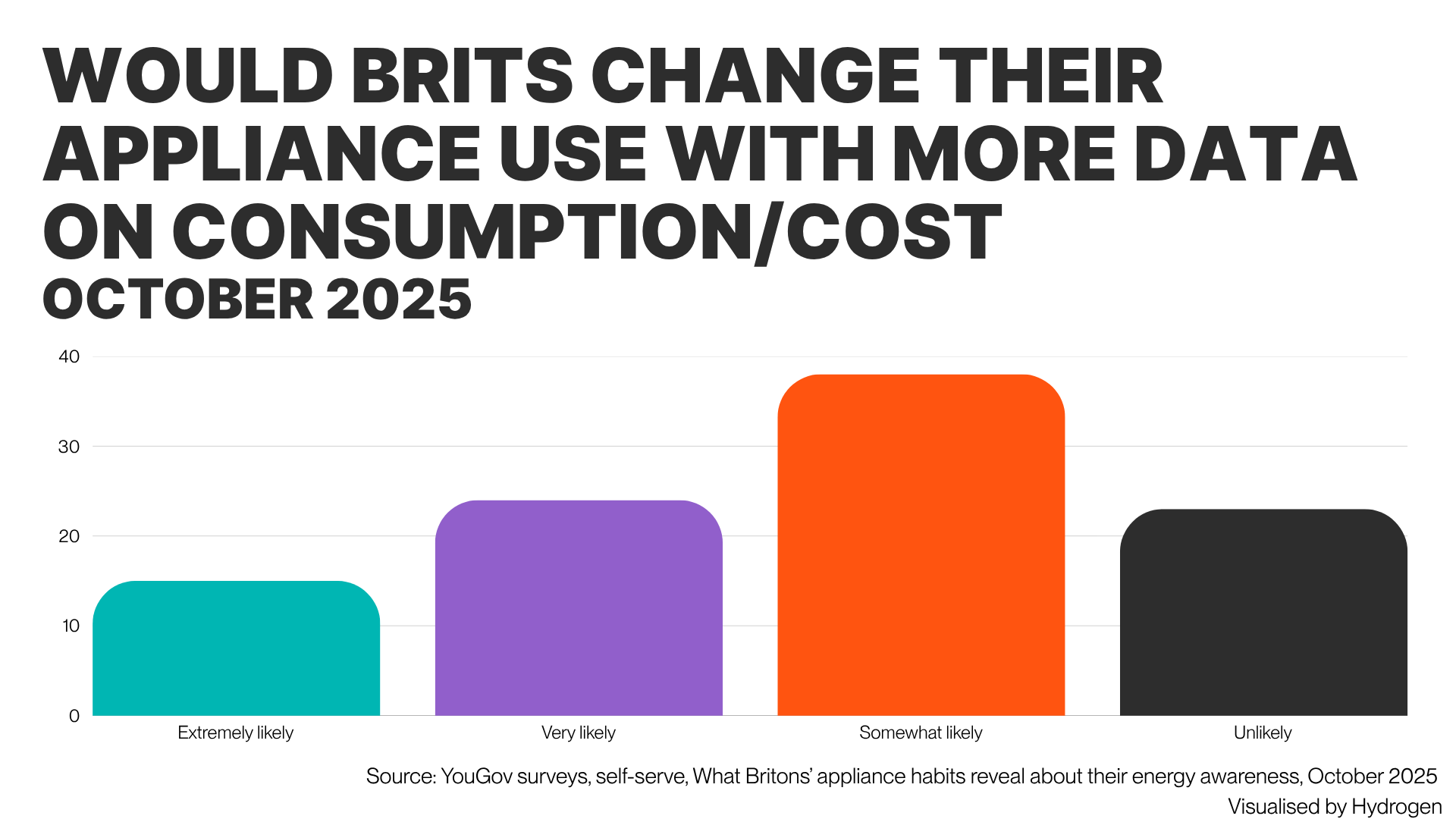
At the same time, the way people interact with energy is changing. Around six in ten Britons now have a smart meter, giving them more access to real-time usage data. Meanwhile, 77% say they would likely change how they use appliances if they had clearer data on energy consumption and cost.
However, access to data does not automatically lead to understanding. Without clear guidance, it can create more questions than answers. This combination of rising costs and increased visibility means expectations are higher. People want to understand not just what they are paying, but why.
What can energy learn from other sector transformations?
The energy sector is not the first to go through a shift of this scale.
Financial services, for example, have faced similar challenges. Increasing regulation, more complex products and declining trust following the financial crisis forced banks to rethink how they communicate.
In response, banks shifted how they communicated, with simplified product language, new tools to help customers understand their spending and manage their money, and focusing more on transparency and customer education. Monzo, for example, put a focus on making finances easier to understand, with real-time notifications and plain language to break down spending.
Energy is facing a similar challenge, with complex issues, confusion over pricing structures and wavering trust. The banking response shows that clarity and usability can become a competitive advantage.
Other industries such as telecoms, transport and pensions have faced similar challenges around increased regulatory scrutiny and complexity. The underlying solution came not from more communications, but clearer communications that made complex systems easier to understand.
What does this mean for marketers in the energy sector?
Marketing and communications within the energy industry are no longer just about raising awareness or promoting initiatives. It plays a more direct role in shaping how the transition is understood and how people engage with it.
At Hydrogen, we see three key areas for focus.
Understanding: Using insight and listening to identify where confusion, concern or misinformation exists around your energy brand, and what audiences actually need to know. For example: what are people searching for, and can you create content that helps explain it?
Shaping: Turning complex, technical or regulated information into clear and easy to understand narratives. This would include reframing infrastructure projects to show what they mean locally (such as new jobs or a more reliable network).
Connecting: Making sure that content reaches people in the places they are already looking for answers, across social, search and emerging AI-driven journeys. This includes answering customer questions, providing quick updates during outages and structuring content so it can be picked up in web and AI-led searches.
As the energy system continues to evolve, the need for clarity will only increase. Marketers in the energy, renewables and wider utilities industry need to consider: are you helping customers make sense of things, or are you adding to the complexity?
If this is something you’re navigating, it’s worth understanding where clarity is breaking down and what that means for trust, engagement and retention. At Hydrogen, we help organisations do exactly that: connecting insight and storytelling to make complex topics easier to understand and act on. Get in touch to find out what we can do for you.